Showing posts with label annotated sketches. Show all posts

Odds and Ends from Sketchbook #147

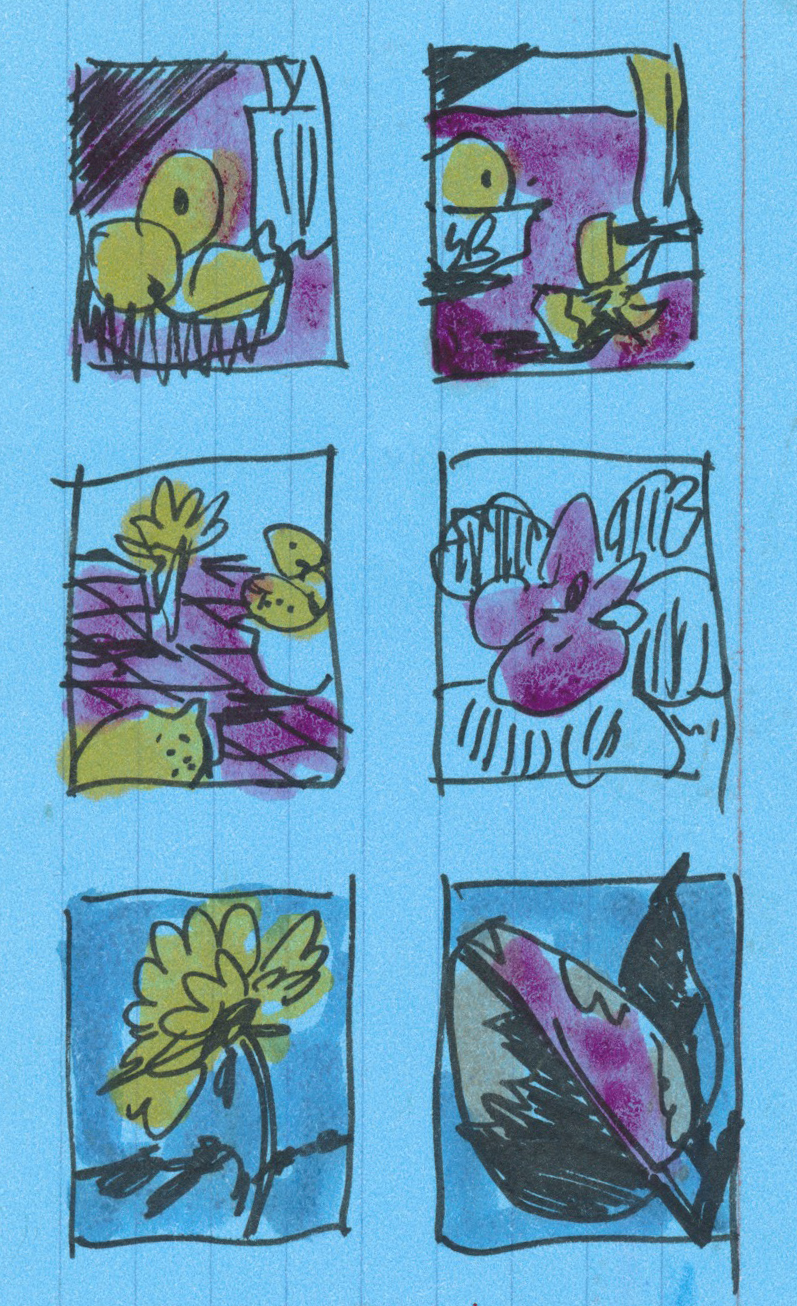
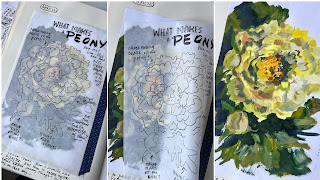
This is a mixture of odds and ends from the recent sketchbook - little notes, page overlays, and such. I use semi-transparent sheets of tracing paper or vellum to protect pages and often get too carried away by the paper and add drawings on them too - you can learn more about why I do this and how in a series of posts Layers in my sketchbooks. And some of these were done with the CMYK pens experiments.


Layers in my sketchbooks: Part 3 - Materials

This is a continuation of my attempt to summarize the ideas behind using layers in my sketchbooks.  Part 1 is about the reasons for adding all the layers to my sketchbooks and
Part 2 is about the evolution of it.

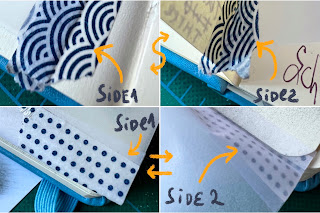
To attach "flaps" to my sketchbook pages I use washi tape and regular cello tape of various sizes (3/4 "Scotch Magic Tape is used the most). The trick is to apply the tape on both sides of the paper - then the connection is stronger and more suitable for working with it (opening and closing). 

Washi tape sometimes is used to create a frame for a sketch. And post-it tape is used to hold some pages that keep falling out of order (it is much less sticky than washi tape and can be re-applied).

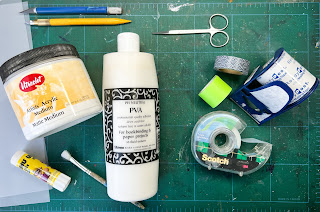
I use UHU glue sticks, PVA glue (often Elmer's), and Matte Acrylic Medium (by Utrecht) to glue things to the pages of my sketchbooks if I just lay them on. 

Page protectors are mostly any transparent paper that I can get my hands on. I used glassine paper (harder to draw on because of the coating), I used tracing paper of all sorts, right now I used mostly vellum paper.

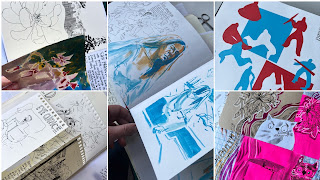
I use scissors and exacto knives to make interesting shapes and folds out of the sketches - t makes for an interesting flow when I am combining a lot of different things on the same page. And I also enjoy sketching with scissors - those sketches often are a reason to add more layers to my sketchbook too. 

Here is a video with some examples:

-------------------------------------------------------------


Layers in my sketchbooks: Part 2 - Page protectors that became more.

This is a continuation of my attempt to summarize the ideas behind using layers in my sketchbooks. Part 1 is here.

I carry my sketchbooks with me everywhere. In a pre-pandemic life they would get more beating than now - but even today the average time I work in one sketchbook is about two months and in that time I am bound to drop it, carry it in the same bag with a bunch of plants, and rocks and will probably step on it a time or two. The result is infuriating: gouaches are smudged and partially transferred onto the facing pages. I tried using only one side of the paper but it just does not work for me. An empty page is just not something I can stand - I always add something to it. 

To save the sketches themselves and the opposite pages too I started taping random pieces of paper as page protectors. But sketchbooks very quickly gained so much weight that I had a hard time closing them and had to tear some pages out towards the end to compensate for all the extras. To counter this effect I started using the thinnest paper I could find - translucent tracing paper. 

At first writing on it was hard for me - but I kept trying  and this endeavor opened up a whole new world of exploration for me. Semi-transparent paper allowed me to take a second look at my sketches, gave some distance, introduced a physical separation between "creating" time and "analyzing" time. In short, it revealed a way for a longer-form communication with my sketchbook. Sometimes I make notes, sometimes I redraw things, correct compositions, make frames. And now I can go back several times. 


-------------------------------------------------------------

Layers in my sketchbooks: Part 1 - How it Started and Why

I started adding layers in my sketchbooks a few years ago when I realized two things:

One is that I like my sketchbooks to be an honest reflection of my life (which means ordinary repetitive, unavoidably messy, and often embarrassing, filled with all sorts of fleeting thoughts, things, and styles). And two - that I like my books to be chronological. 

Before that, I siloed different parts of my life and kept several sketchbooks going - drawings from life, sketches for illustrations, plans, projects, designs, layouts, etc. I still do that sometimes if the project is too big, too private, proprietary or if I have a need to compartmentalize. But because life is impossibly interconnected everything ends up reflected in my main sketchbooks in one form or another - even if it is just a tiny note on the side of a sketch about something completely different, reflection on materials that I am using for a project or thumbnails that I hashed out while reading or learning about something.

The resolution to honor both of my requirements gave me permission and the obligation to come up with systems to make it happen. It took some time and is still evolving but now I feel like everything has a home. I have the freedom to use whatever paper I happened to crave for just this one drawing or to stick tiny notes, doodles, and sketches drawn on napkins, envelopes, receipts, etc., and if I forgot to add a sketch and found it a week later - now I know where to put it so that I can find it again: just flip back to the day it was made and make it work somehow.
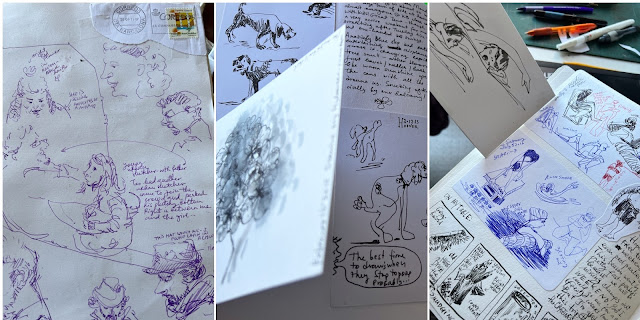
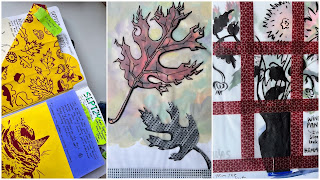
Here are three sketches: from Sketchbooks 55, 88 and 99 (from 2011 to 2016) - I started with just sticking a corner of an envelope on a page with sketches while traveling, then began adding some sketches as flaps and the rightmost page from 2016 has some custom cut sketches glued in and a bunch of things on a sketchbook spread and added a two sided flap. And here is a video with a tiny flip-through some of the pages from the most recent book - #138. 

-------------------------------------------------------------